About
A studio built on the stories that got away.
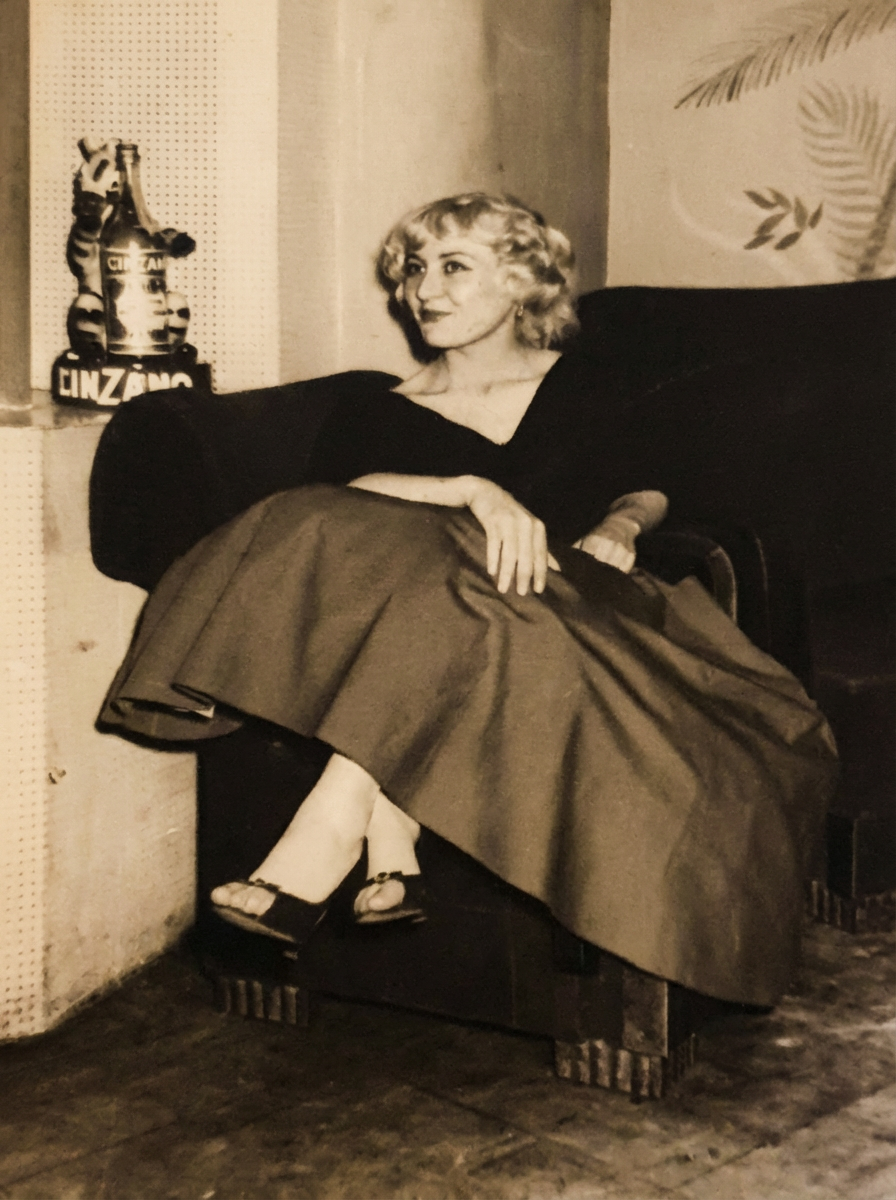
My grandmother Maguy was eight years old when she decided to visit her aunt on the Normandy coast. It was occupied Paris. She walked to the station alone, found a train, and got as far as she got before the German army noticed a small girl travelling by herself and brought her home. She told that story for the rest of her life, and every time she told it, it was a little funnier and a little braver.
She had reasons to be brave. Her father was a merchant marine captain whose ship was sunk by the Germans, and her mother raised five children on her own in a city under occupation. Every summer that mother loaded the children onto bicycles and rode them from Paris to the coast to camp, because a summer is a summer, war or not.
Maguy graduated at the top of her class at fourteen, and a member of the Rothschild family took an interest in her and saw to her education in the ways of Parisian society. She modelled. She set type for magazines. She won dance competitions. She met my grandfather, a veteran of the French Foreign Legion, in Paris, and followed him to Brussels, where she became an international Scrabble champion and one of the first women in Belgium to hold a commercial driver's licence.
I know all of this the way you know a song you only ever heard through a wall.
When Maguy died, the stories went with her. There are no recordings. There is no document that says how the train ride ended, or what her mother packed for the coast, or what a fourteen-year-old girl was actually taught about society. What is left is the memory of a few relatives, each of us holding a slightly different version, none of us certain. Every year the wall gets thicker.
I would trade almost anything for twenty minutes of her on camera, in her own voice, telling any one of those stories properly.
That is what Devotive Legacy makes. We sit with a person long enough for the real stories to surface, we film them with care, and we edit with restraint so that what survives is the person, not our idea of them. The films are unhurried. The interviews are long. The edit rooms are quiet. We don't perform sentiment and we don't manufacture urgency. We make the record I wish I had.
We're a small team by choice and we take on a small number of families each year, so the people you meet on the first call are the people who deliver the film. If something here resonates, the best next step is a conversation. We don't sell. We listen, and then we tell you honestly whether we're the right people for what you have in mind.